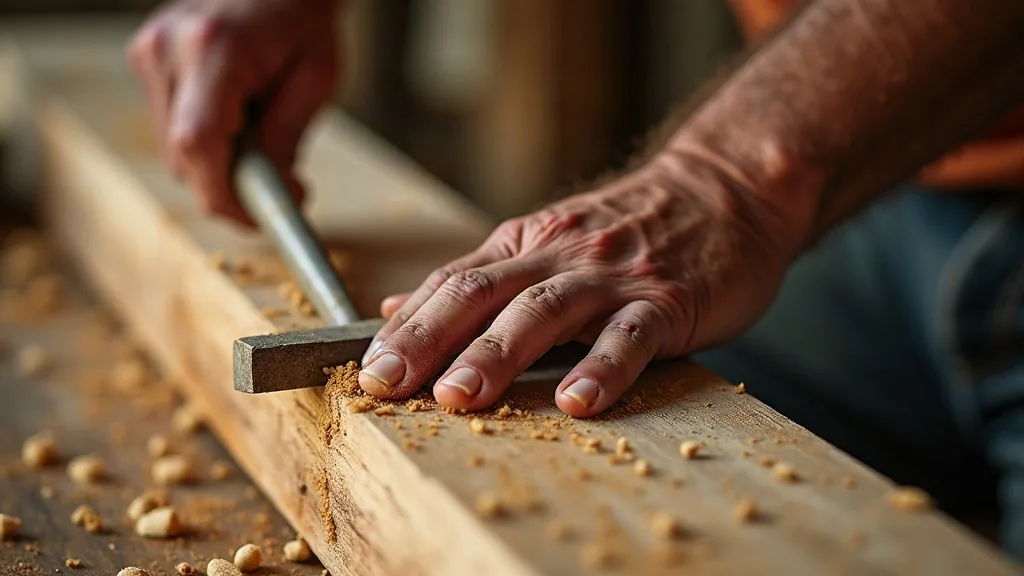
Panrita lopi means, roughly, one who is expert in vessels — the master shipwright who holds authority over a build at Tana Beru. The role is not a job title issued by anyone. It is a standing earned over decades and recognised by the community, and it carries technical judgement and ritual responsibility in the same person. In a tradition with no drawings, this is where the drawings live.
What the role actually covers
A panrita lopi decides the vessel’s proportions, directs the work, resolves every question the absence of a plan set leaves open, and leads the ceremonies at keel laying and launch. Those are not two roles bundled together for convenience. In this tradition they are one role, because the knowledge and the observances that protect it were transmitted together, through the same apprenticeship, by the same people.
Practically, on a given hull, that means: the master shipwright sets the principal dimensions and the relationships between them, decides how each strake runs, judges fairness by eye and batten, determines when a plank is right and when it must be re-cut, and carries responsibility for the outcome. The Konjo method describes the technique; the panrita lopi is the reason it works.
Why the role exists in this form
It follows directly from shell-first construction. When planks are fastened edge to edge into a self-supporting shell and frames are fitted afterwards, there is no mould and no drawing to check against. Every plank is cut to fit the one before it. The shape emerges incrementally and cannot be corrected on paper because there is no paper.
That places an enormous load on judgement, applied continuously and in real time, by someone who can see unfairness before it becomes structural. A drawing can be handed to a competent crew and executed. This cannot. The inverted logic of the build explains why the intelligence has to sit in a person rather than in a document.
How the standing is earned
Through years of work, starting young, doing the unglamorous parts, watching, and gradually being trusted with decisions that matter. The district-wide reputation this produced is the subject of Butta Panrita Lopi. There is no examination and no certificate. Recognition comes from the community and from other shipwrights, and it accumulates through hulls that turned out well and vessels that stayed at sea.
This is a genuinely different professional structure from a certified trade, and it has two consequences. It produces a very high standard, because reputation is the only credential and it is earned in public over decades. And it transmits slowly, because the only way to acquire it is to spend those decades doing it — which is exactly the problem examined in the apprenticeship gap.
The ritual side, without romanticising it
The blessings at keel laying and the ceremony at launch are led by the master shipwright, and they are part of the build rather than decoration attached to it. They occupy real days, involve real cost, and are taken seriously by the people doing the work. The ceremonies page sets out what happens.
It is worth being careful here, because writing about traditional shipbuilding tends to reach for mysticism. The honest description is simpler: this is a community in which the person who holds the most demanding technical responsibility also holds the observances associated with it, and the two are not experienced as separate categories. An owner does not have to share the beliefs. An owner does have to respect that the ceremonies are not optional extras to be scheduled around a photographer.
What this means when you are commissioning a vessel
- You are choosing a person, not a company. Tana Beru is not a single shipyard — it is a shoreline of independent crews, each under its own master shipwright. The variable that most determines your hull’s quality is which crew builds it.
- Look at completed work. Reputation is the credential in this system, so use it. Ask which vessels a crew has built and go and look at them, preferably out of the water.
- Judge fairness at the turn of the bilge. The hardest curve in a hull is the honest test, as noted in the walking route.
- Write the specification anyway. Respecting craft authority does not mean leaving your requirements unstated. Dimensions, species, scantlings and equipment belong in writing — see commissioning a build.
- Supervision is not distrust. Independent verification at open stages protects both parties and produces the documentation a registration authority will later require. That is the argument in newbuild supervision.
The tension worth naming
There is a real friction between craft authority and modern owner expectations, and pretending otherwise helps nobody. A master shipwright’s authority rests on judgement that cannot be fully articulated; a modern owner needs specification, verification and documentation. Both positions are legitimate.
The workable resolution, in practice, is to separate domains. The owner specifies what the vessel must do and be: dimensions, capacities, species, equipment, certification standard. The master shipwright decides how the hull achieves it. Verification checks the first list, not the second. An owner who tries to direct plank runs will be ignored and will deserve to be; a shipwright who treats a written specification as advisory will produce a vessel that cannot be registered for its intended use.
A note on how we write about this
We do not publish the names of individual shipwrights on this site, and we do not attribute articles to invented individuals — editorial work here is published by the Tana Beru Shipyard Desk. Naming particular craftsmen in marketing material without their involvement is a practice this sector does too casually, and the role of panrita lopi belongs to a community rather than to a brand’s marketing copy. The recognition that does exist is collective: the art of pinisi shipbuilding was inscribed on the UNESCO Representative List of the Intangible Cultural Heritage of Humanity in 2017, which is examined in what the inscription changed.
Frequently asked questions
What does panrita lopi mean?
Roughly, one who is expert in vessels — the master shipwright who holds authority over a build. The standing is earned over decades and recognised by the community rather than awarded by any institution.
What does a panrita lopi actually do?
Sets the vessel’s principal dimensions and proportions, directs the work, judges the fairness of the hull by eye and batten, decides when a plank is right, and leads the ceremonies at keel laying and launch.
Why does the role combine technical and ritual authority?
Because the knowledge and the observances associated with it were transmitted together through the same apprenticeship. In this tradition they are not experienced as separate categories.
How is the standing earned?
By starting young, doing the unglamorous work for years, and gradually being trusted with decisions that matter. There is no examination or certificate — reputation accumulates publicly through hulls that turned out well.
Does respecting craft authority mean not writing a specification?
No. The workable separation is that the owner specifies what the vessel must do and be — dimensions, capacities, species, equipment, certification standard — while the master shipwright decides how the hull achieves it.